



There’s a particular kind of exhaustion that’s hard to describe — not the tiredness that comes from a long run or a busy day, but the bone-deep fatigue of being constantly switched on. Notifications, deadlines, social comparisons, the relentless pressure to optimise every waking hour. Modern life moves fast, and most of us are simply trying to keep up. But what if keeping up is precisely the problem?
Slow living is gaining momentum as a genuine cultural countermovement — not a productivity hack or a wellness trend, but a fundamental shift in how people are choosing to relate to time, attention, and meaning. It’s about doing less, but doing it better. It’s about choosing depth over speed.
This article explores what slow living actually means, why so many people are drawn to it, and how its principles can make a real, measurable difference to your wellbeing.
What Is Slow Living, Really?
The term “slow living” can sound deceptively simple — just… live slowly. But it’s more nuanced than pacing yourself through the day. Slow living is a philosophy rooted in intentionality. It asks you to question the default speed of modern life and make conscious choices about where your time and energy actually go.
The slow movement itself began in 1989 with Carlo Petrini’s protest against a McDonald’s opening near the Spanish Steps in Rome. He founded the Slow Food movement, which championed traditional cooking, local produce, and the pleasure of shared meals over fast, disposable food culture. From that single act of resistance, a much broader philosophy emerged — one that eventually expanded into slow travel, slow fashion, slow parenting, and slow living as an overarching lifestyle choice.
At its core, slow living isn’t about doing everything at a snail’s pace. It’s about doing things at the right pace — the pace that allows you to be present, to enjoy what you’re doing, and to make deliberate choices rather than reactive ones.
The Key Principles of Slow Living
While slow living looks different for every person, several core principles tend to run through it consistently:
- Intentionality: Making conscious choices about how you spend your time rather than drifting through the day on autopilot.
- Presence: Giving your full attention to what’s in front of you, rather than half-living your life while mentally elsewhere.
- Simplicity: Reducing the clutter — physical, digital, and social — that creates unnecessary noise in your life.
- Connection: Prioritising meaningful relationships and real-world experiences over virtual ones.
- Sustainability: Making choices that are kinder to both your own wellbeing and the environment around you.
- Enough-ness: Resisting the cultural narrative that more is always better, and finding satisfaction in what already exists.
These aren’t rigid rules — they’re more like lenses through which to examine your own life and ask where more slowness might serve you.
The Real Benefits of Living More Slowly
The appeal of slow living isn’t just aesthetic (though there’s certainly a beautiful quietness to it). The benefits are increasingly backed by research into how chronic busyness affects mental and physical health.
Mental Health and Stress Reduction
According to the Mental Health Foundation, stress, anxiety, and depression are among the most common mental health problems in the UK, with work-related stress accounting for more than half of all working days lost due to ill health. Much of this stress is rooted in the sense that there is too much to do and never enough time — a defining characteristic of how many people experience modern life.
Slow living directly addresses this by encouraging a different relationship with time. Rather than treating every moment as a resource to be maximised, slow living invites you to treat time as something to be inhabited. Research consistently shows that mindfulness — which is essentially what slow living cultivates — reduces cortisol levels, lowers anxiety, and improves overall psychological resilience.
Improved Physical Health
The physical benefits of slowing down are just as compelling. Chronic stress is linked to a host of physical health problems: poor sleep, weakened immunity, cardiovascular issues, and digestive problems. When we habitually rush through meals, skip rest, and sacrifice sleep for productivity, we’re essentially borrowing against our physical health.
Slow living encourages the kind of habits that support physical wellbeing — cooking and eating proper meals, spending time outdoors, prioritising sleep, and moving your body in ways that feel enjoyable rather than punishing. These aren’t revolutionary ideas, but they’re ones that tend to fall away when life speeds up.
Deeper Relationships and Social Connection
One of the most commonly reported casualties of busy modern life is the quality of relationships. When everyone is stretched thin, social connection tends to become transactional — brief check-ins, cancelled plans, conversations conducted over phones while doing something else entirely.
Slow living prioritises genuine connection. This might mean hosting a long, unhurried dinner rather than squeezing in a quick coffee. It might mean putting your phone in a drawer when spending time with your children. It might simply mean giving someone your full attention when they’re speaking to you. These small acts of presence are, in many ways, the most radical thing you can do in a distracted age.
Why Gen Z Is Embracing Slow Living
It might seem surprising that a generation raised on social media and instant gratification would be drawn to slow living — but the data suggests otherwise. Gen Z (broadly, those born between 1997 and 2012) are increasingly rejecting hustle culture in favour of boundaries, rest, and meaning.
Part of this is born from disillusionment. Gen Z came of age watching millennials burn out chasing careers and productivity metrics, and many have decided they don’t want the same. Trends like “quiet quitting” (doing your job without going above and beyond), “soft life” aesthetics, and a renewed interest in cottagecore and rural simplicity all point to a generation actively pushing back against the pace of modern life.
There’s also a growing awareness among younger generations of the mental health crisis that chronic busyness can create. Having grown up in an era of unprecedented anxiety and depression statistics, many Gen Z individuals are proactively seeking out lifestyles that protect their mental health — and slow living fits that bill.
Slow Living Examples: What It Looks Like in Practice
One of the most helpful things about slow living is that it doesn’t require a dramatic life overhaul. You don’t need to move to a cottage in the countryside or quit your job (though some people do exactly that). More often, slow living is built from small, cumulative shifts in daily habits.
Morning Routines Without Rush
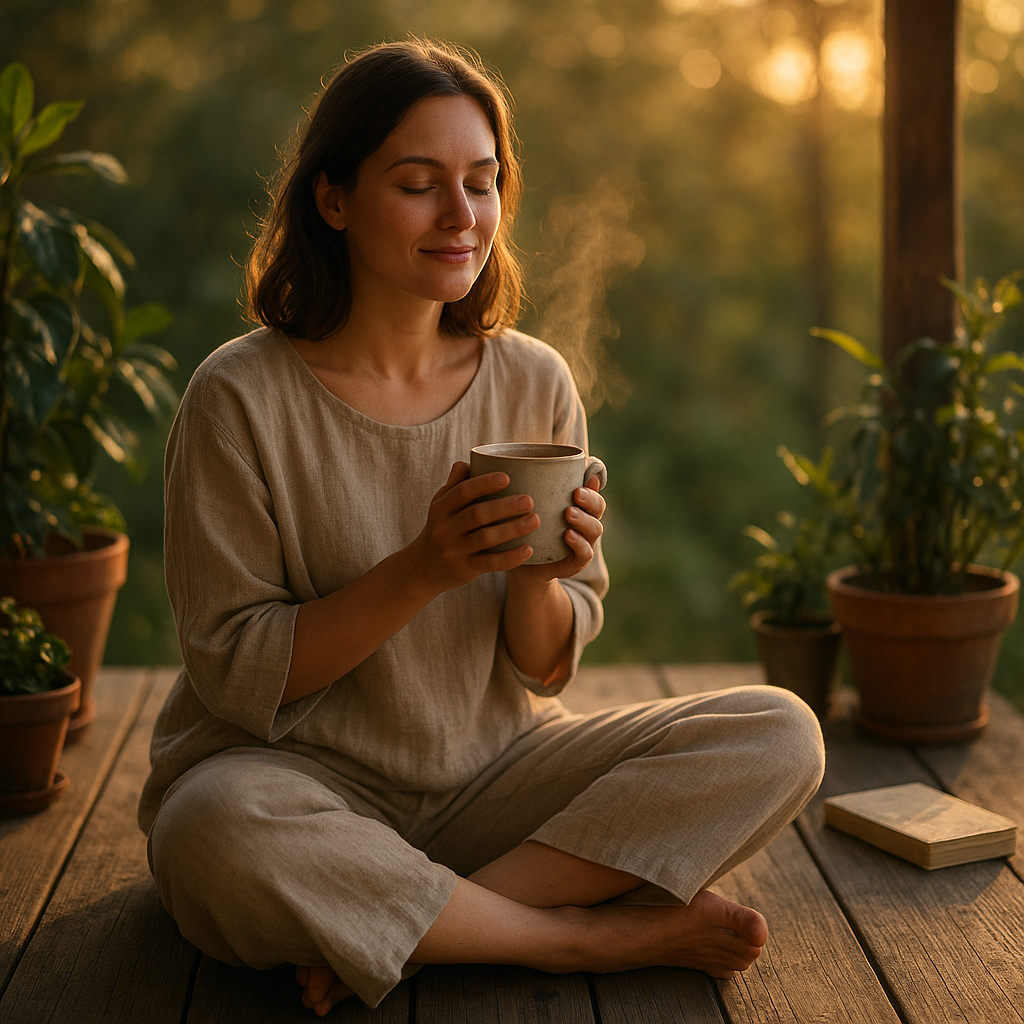
Many slow living advocates point to the morning as the most important place to start. Rather than immediately checking your phone, a slow morning might involve making coffee properly, sitting with your thoughts, perhaps journalling or reading something you enjoy. It sounds simple, but beginning the day without urgency sets a very different tone for everything that follows.
Mindful Eating and Home Cooking
Fast food — in every sense of the term — is central to modern life. Slow living invites a return to cooking from scratch, eating without screens, and actually tasting your food. Shared meals, especially, are one of the oldest forms of human connection, and there’s something deeply grounding about them.
Deliberate Consumption
Slow living tends to sit comfortably alongside minimalism and conscious consumerism. Buying less, but choosing more carefully. Opting for quality over quantity. Shopping second-hand or locally. These choices reduce environmental impact, but they also reduce the cognitive load of too much stuff.

Digital Boundaries
Perhaps the most immediately accessible entry point into slow living for most people is simply putting the phone down. Designating phone-free times — during meals, in the hour before bed, in the first thirty minutes of the morning — creates space for the mind to actually rest and wander, which is essential for creativity, emotional processing, and genuine relaxation.
What Are the Benefits of Living a Modern Lifestyle — and What Are Its Costs?
To be fair, modern life offers extraordinary things: connection, convenience, opportunity, access to knowledge and culture on a scale previous generations could barely imagine. The benefits of modern living are real, and slow living isn’t about rejecting them wholesale.
The issue is the cost. When constant connectivity becomes compulsive checking, when convenience becomes dependence, when opportunity becomes pressure — the benefits begin to curdle. The modern lifestyle, unchecked, tends towards overwhelm. Slow living is less about rejecting modernity and more about becoming its editor — keeping what genuinely enriches your life and setting aside what simply exhausts you.
Finding Your Own Version of Slow
Perhaps the most important thing to understand about slow living is that there’s no single correct version of it. A parent of three young children will practise it differently from a retired person. Someone living in a city will find different expressions of it than someone in a rural village. The point isn’t to match an Instagram aesthetic or follow a prescribed set of rules — it’s to bring more intention, presence, and meaning to the life you’re actually living.
Some useful questions to begin with:
- Which parts of your day feel most rushed or reactive?
- Where do you feel most drained, and is that drain necessary?
- What activities make you feel genuinely restored?
- How much of your busyness is chosen, and how much is simply habitual?
- What would you do more of if you felt you had permission to slow down?
These aren’t questions with tidy answers, but sitting with them honestly can reveal a great deal about where small shifts might make a large difference.
In Summary
Slow living is, at its heart, a response to a culture that has confused busyness with meaning. It’s a quiet but powerful insistence that presence matters more than productivity, that depth matters more than speed, and that the quality of your attention is more valuable than the quantity of your output.
The benefits are well-documented: lower stress, better mental and physical health, richer relationships, and a greater sense of satisfaction with everyday life. The principles — intentionality, simplicity, presence, connection — are accessible to anyone, regardless of circumstance. And the practice itself doesn’t require perfection or a complete lifestyle overhaul.
It begins, as most meaningful things do, with a single small choice: to slow down, just a little, and see what becomes possible when you do.