



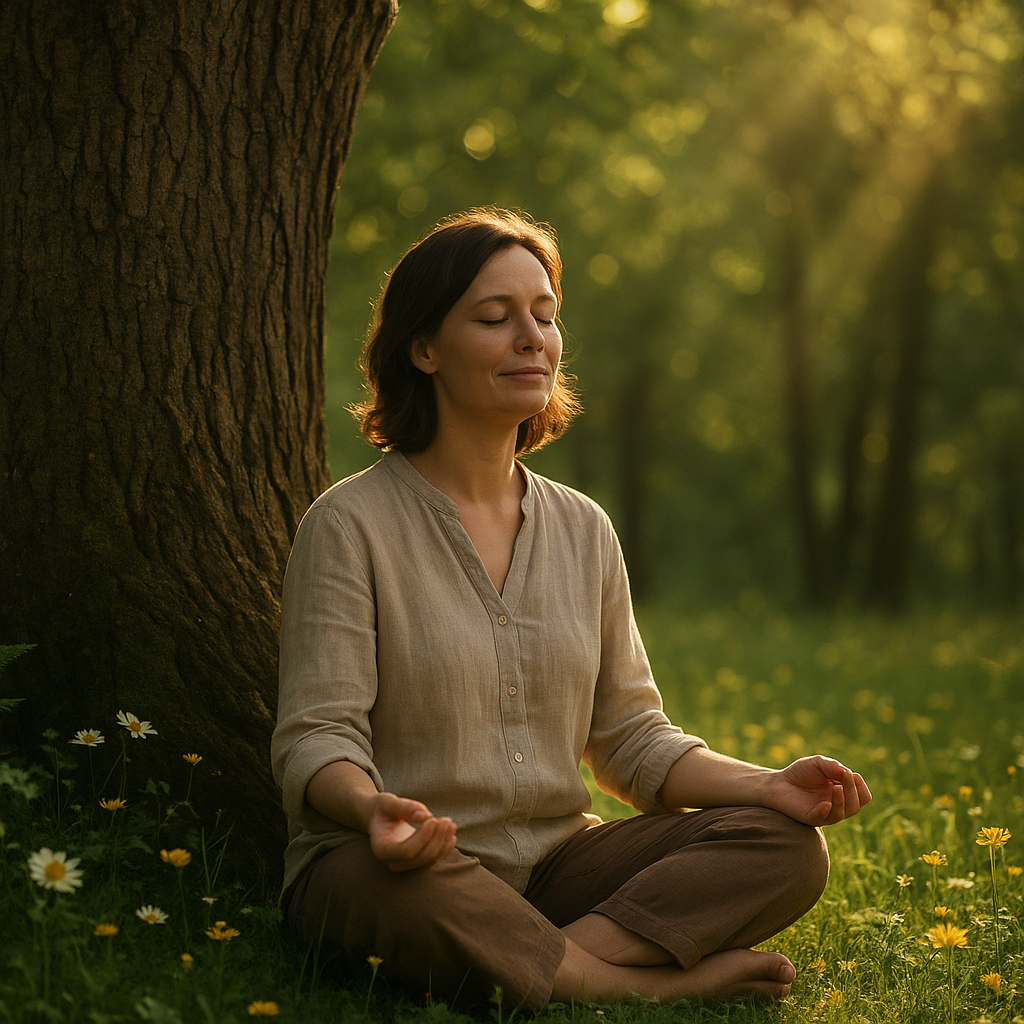
Most of us know, instinctively, that a walk through the woods feels better than another hour hunched over a laptop. There’s something that happens — a kind of exhale — when you step outside and actually pay attention to the world around you. But here’s the thing: that feeling isn’t just poetic. It’s deeply, measurably real. The relationship between nature and mental well-being is one of the most well-researched areas in environmental psychology, and the findings are far more profound than simply “fresh air is nice.”
Whether you live surrounded by countryside or sandwiched between city buildings, the way you engage with the natural world has a genuine impact on your mood, cognition, stress levels, and long-term mental health. And most of us are getting far less of it than we need.
What Science Actually Says About Nature and Mental Health
The research on this topic is extensive and, frankly, quite compelling. A large-scale study published by the American Psychological Association found that people who spent time in natural environments reported lower levels of stress, anxiety, and rumination compared to those who spent equivalent time in urban settings. Rumination — that exhausting mental loop of replaying worries and negative thoughts — is a key driver of depression, so anything that interrupts it matters enormously.
According to research reviewed by Mental Health UK, spending just two hours a week in nature is associated with significantly better health and well-being outcomes. That breaks down to roughly 17 minutes a day — less time than most people spend scrolling through social media before bed.
A major study from the University of Michigan found that group nature walks were linked to significantly lower levels of depression and perceived stress, as well as enhanced positive affect and mental well-being. And a 2019 study published in Scientific Reports found that people who spent at least 120 minutes per week in nature were substantially more likely to report good health and high well-being than those who reported no nature exposure at all.
The evidence isn’t just self-reported, either. Physiological measurements show that time in nature reduces cortisol (the body’s primary stress hormone), lowers blood pressure, and decreases heart rate. Nature isn’t just making us feel better — it’s changing what’s happening inside our bodies.
How Nature Affects Human Psychology
To understand why nature has such a powerful effect on our minds, it helps to look at two key psychological theories that researchers keep coming back to.
Attention Restoration Theory
Developed by Rachel and Stephen Kaplan in the 1980s, Attention Restoration Theory (ART) proposes that natural environments replenish our capacity for directed attention — the kind we use when focusing on tasks, making decisions, or filtering out distractions. Modern life demands an enormous amount of this cognitive effort, and it depletes us in ways we often don’t recognise until we’re thoroughly burnt out.

Nature, by contrast, captures our attention in what the Kaplans called a “soft” way — effortlessly, without draining us. The movement of leaves, the sound of water, the shifting of light through clouds — these things engage our minds gently, allowing our directed attention systems to rest and recover. It’s essentially a mental reset that no amount of Netflix can replicate.
Stress Recovery Theory
Stress Recovery Theory (SRT), developed by Roger Ulrich, takes a more evolutionary approach. The theory suggests that humans evolved in natural environments and, as a result, our nervous systems are primed to relax in them. Natural settings trigger a shift from the sympathetic nervous system (fight or flight) to the parasympathetic nervous system (rest and digest), reducing physiological markers of stress far more quickly than urban environments do.
Ulrich’s famous 1984 study demonstrated this vividly: patients recovering from surgery who had a window view of trees recovered faster, required less pain medication, and had fewer post-operative complications than those whose windows faced a brick wall. A view. That’s all it took.
10 Benefits of Nature on Mental Well-Being
The benefits of spending time in natural environments go well beyond simply feeling calmer. Here’s a look at what regular nature exposure has been shown to support:
- Reduced anxiety and stress: Lower cortisol levels and a calmer nervous system response are consistently found in people who spend time outdoors.
- Improved mood: Even short walks in green spaces have been linked to elevated mood and reduced feelings of sadness or hopelessness.
- Better concentration and focus: Nature exposure restores directed attention, making it easier to concentrate on tasks afterwards.
- Decreased symptoms of depression: Multiple studies link regular nature contact with reduced depressive symptoms, particularly in combination with physical activity.
- Enhanced creativity: A study by the University of Utah found that people who spent four days in nature showed a 50% improvement in creative problem-solving tasks.
- Improved sleep: Exposure to natural light and reduced stress both contribute to better sleep quality and more regulated circadian rhythms.
- Greater sense of meaning and purpose: Time in nature is associated with increased feelings of awe, which research links to a broader sense of meaning in life.
- Reduced rumination: A Stanford study found that participants who walked in nature showed decreased activity in the subgenual prefrontal cortex — the brain region associated with rumination.
- Stronger social connection: Green communal spaces encourage social interaction and reduce feelings of loneliness and isolation.
- Better self-esteem: Studies show that “green exercise” — physical activity in natural settings — boosts self-esteem more than the same activity indoors.
Nature and Mental Health Statistics Worth Knowing
If you’re someone who likes numbers to back up what you’re feeling, the data is quite striking. Here are some of the most significant findings from recent research:
- People who live closer to green spaces report lower levels of mental distress and are less likely to be diagnosed with anxiety or depression, according to research compiled by the NHS.
- A study in Landscape and Urban Planning found that urban residents who spent time in parks had significantly lower cortisol levels on the days they visited compared to days they didn’t.
- Research from the European Centre for Environment and Human Health found that people in England who visited natural spaces at least once a week were 1.6 times more likely to report good mental health than those who did not.
- According to the World Health Organisation, depression is now the leading cause of disability worldwide — making the low-cost, accessible intervention of nature exposure more relevant than ever.
- A meta-analysis of 143 studies found that contact with nature was associated with reductions in salivary cortisol, heart rate, blood pressure, and self-reported stress and anxiety.
Why Modern Life Pulls Us Away From Nature
Here’s the uncomfortable irony: at the same time that evidence for nature’s mental health benefits is growing stronger, most people in the developed world are spending less time outdoors than ever before. According to some estimates, people in the UK spend approximately 90% of their time indoors. Children today spend significantly less time outside than their parents did at the same age.
The reasons are layered — urbanisation, screen culture, increasingly sedentary jobs, safety concerns about children playing outside, and the general busyness of modern life all play a role. Nature hasn’t become less effective; we’ve just become less available to it.
This disconnection has a name in some circles: nature deficit disorder — a term coined by author Richard Louv to describe the growing distance between humans and the natural world, and the psychological cost that comes with it. While it’s not a clinical diagnosis, the concept has resonated because it captures something real that many people feel but struggle to articulate.

Practical Ways to Reconnect With Nature
The good news is that benefiting from nature doesn’t require moving to the countryside or taking expensive eco-retreats. The research consistently shows that even small, regular doses of nature make a meaningful difference.
For City Dwellers
- Seek out local parks, canal paths, or community gardens — even brief visits count.
- Eat lunch outside when the weather allows, ideally somewhere with grass or trees rather than concrete.
- Bring nature indoors with houseplants — studies suggest even indoor plants can have a mild stress-reducing effect.
- Open windows to let in natural sounds and light wherever possible.
- Walk rather than taking the tube or bus for short journeys, choosing the greenest route available.
Making Nature a Habit
- Start small: A 15-minute walk in the morning is more sustainable than an ambitious weekend hike you never get around to. Pairing it with other simple daily self-care practices can make it easier to build consistency.
- Leave your phone in your pocket: The mental benefits of nature are reduced when attention is split — try being genuinely present with your surroundings.
- Engage your senses deliberately: Notice what you can hear, smell, feel, and see. This isn’t just nice advice — it’s what activates the restorative effects.
- Combine it with something you enjoy: Walking with a friend, journalling outdoors, or sketching what you see all make the habit easier to maintain.
- Try “green exercise”: Running, cycling, or yoga in a park amplifies the mental health benefits of both physical activity and nature exposure simultaneously.
Nature Is Not a Cure — But It’s a Powerful Tool
It’s worth being clear about one thing: nature exposure is not a replacement for professional mental health treatment. If you’re experiencing clinical depression, severe anxiety, or any significant mental health condition, please seek support from a qualified healthcare professional. Nature is not a substitute for therapy, medication, or crisis intervention.
What it is, however, is a genuinely powerful complementary resource — one that is free, widely accessible, and backed by substantial scientific evidence. For many people, regular time in nature can be a meaningful part of how they look after their mental health on an ongoing basis, much like sleep, movement, and social connection. Pet owners may find additional benefit in spending that outdoor time with their animals, as supporting your pet’s health and vitality through natural approaches can enrich the experience for both of you.
Final Thoughts
The relationship between nature and mental well-being is one of the clearest examples we have of ancient wisdom meeting modern science. People have always known, on some level, that the natural world does something good for the human spirit. Now we understand more about why — the cortisol drops, the parasympathetic nervous system kicks in, the ruminating brain quiets down, and the depleted attention system gets a chance to recover.
The practical takeaway is simpler than most wellness advice: go outside. Do it regularly. Put your phone away while you’re there. Pay attention to what’s around you. Two hours a week is the evidence-backed threshold, but even a few minutes a day adds up over time.
In a world that increasingly pulls our attention towards screens, notifications, and artificial environments, the natural world remains one of the most effective antidotes we have — and it’s been there all along.