


That flash of yellow in a shop window. The way your favourite red jumper makes you stand a little taller. The reason you instinctively reach for black on days when you want to feel in control. Colour isn’t just decoration — it’s a psychological tool that influences how we feel, how others perceive us, and even how our brains function throughout the day. Yet most of us get dressed on autopilot, barely considering why certain garments make us feel invincible whilst others leave us feeling oddly deflated.
The relationship between what we wear and how we think goes far deeper than simple aesthetics. Research suggests that our clothing choices can affect our cognitive performance, alter our mood within minutes, and send powerful subconscious signals to everyone we encounter. Understanding this psychological dimension of colour in clothing transforms getting dressed from a mundane routine into a deliberate act of self-expression and emotional regulation.
The Science Behind Colour Psychology and Fashion
Colour psychology examines how different wavelengths of light affect human behaviour and emotion. When light hits the retina, it triggers responses in the hypothalamus — the brain’s command centre for hormones, sleep cycles, and emotional regulation. This biological response explains why bright colours can literally energise us, whilst muted tones tend to calm our nervous system.
In fashion, this translates to a phenomenon researchers call “enclothed cognition” — the systematic influence that clothes have on the wearer’s psychological processes. A study published in the Journal of Experimental Social Psychology found that participants wearing a white lab coat performed better on attention-related tasks, demonstrating how symbolic meaning attached to clothing affects cognitive function.
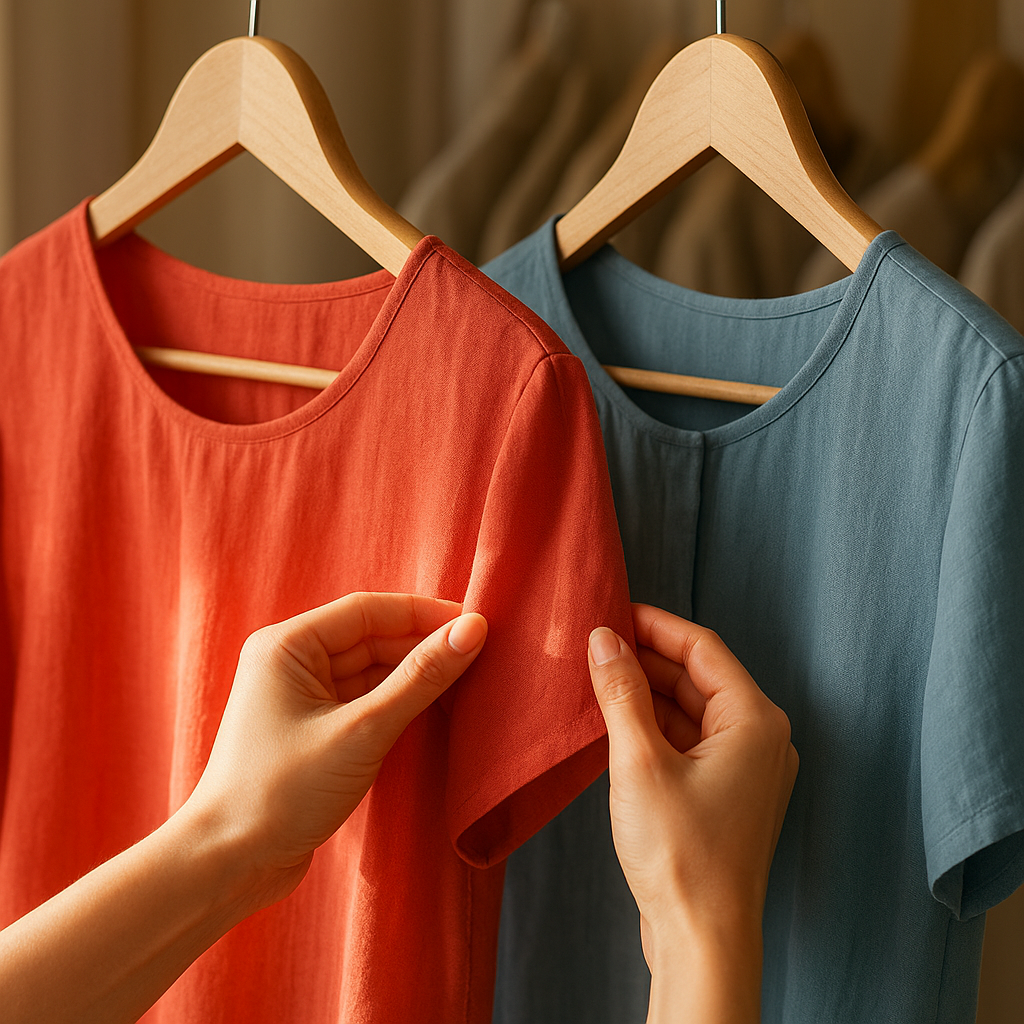
When you add colour to this equation, the effects multiply. A 2018 study revealed that people wearing red were perceived as more attractive and confident by observers, whilst those in blue were rated as more trustworthy and intelligent. These aren’t merely fashion myths — they’re measurable psychological effects that occur within the first seven seconds of meeting someone.
How Different Colours Affect Your Mind and Mood
Red: Power, Passion, and Physical Energy
Red is the most physiologically arousing colour. It increases heart rate, raises blood pressure, and triggers the release of adrenaline. Wearing red doesn’t just make you look more confident — it can genuinely make you feel more powerful. Research from the University of Rochester found that athletes wearing red performed better and were perceived as more dominant by opponents.
However, red’s intensity can work against you in certain contexts. The same boldness that helps you command a boardroom might make you appear confrontational in a negotiation. The key is understanding when you want to project power and when you need approachability.
Blue: Trust, Calm, and Cognitive Performance
Blue is the world’s favourite colour for good reason. It lowers blood pressure, slows respiration, and promotes feelings of stability and trust. Studies show that people exposed to blue environments demonstrate enhanced creative thinking, whilst the colour’s association with reliability makes it ideal for situations where you need to build rapport quickly.
Navy blue, in particular, has become synonymous with competence and authority. It’s no coincidence that police uniforms, corporate suits, and judicial robes all favour this shade. When you wear blue, you’re tapping into centuries of cultural conditioning that associates the colour with dependability.
Yellow: Optimism, Energy, and Mental Stimulation
Yellow triggers the release of serotonin — the brain’s natural mood lifter. It’s the colour most associated with happiness, optimism, and mental clarity. A study in Color Research and Application found that exposure to yellow increased feelings of alertness and promoted faster decision-making.
The challenge with yellow is its intensity. Whilst small doses can brighten your mood and make you appear more approachable, head-to-toe yellow can overwhelm both you and those around you. Think of it as an accent colour — a yellow scarf or shirt can lift your spirits without tipping into overstimulation.
Black: Authority, Sophistication, and Emotional Armour
Black occupies a unique psychological position. It’s simultaneously associated with elegance and mourning, power and rebellion, sophistication and anonymity. Neuroscientist Dr. David Eagleman suggests that black’s psychological impact comes from its light-absorbing properties — it creates a visual “boundary” that can feel protective.
People who frequently wear black often report feeling more in control and less vulnerable. A 2019 survey found that 56% of respondents associated black clothing with confidence, whilst 41% linked it to intelligence. However, relying exclusively on black can sometimes signal emotional withdrawal or a desire to avoid attention.
Green: Balance, Harmony, and Stress Reduction
Green occupies the exact centre of the visible spectrum, requiring no adjustment from the eye to process. This creates a natural sense of ease and balance. Exposure to green has been shown to reduce stress hormones, lower blood pressure, and promote feelings of renewal.
In clothing, green signals approachability and groundedness. It’s particularly effective in situations where you want to appear calm under pressure or create a sense of trustworthiness without the formality of navy or black. This connection between colour and calm mirrors how nature shapes mental well-being through its own restorative palette.
What Does Wearing Different Colours Symbolise?
Beyond personal psychology, colours carry symbolic weight that varies across cultures and contexts. In Western cultures, white typically represents purity and cleanliness — which is why it’s traditional for weddings and medical professionals. However, in many Eastern cultures, white is associated with mourning.
Purple has long symbolised royalty and luxury, a connection dating back to when purple dye was so expensive that only nobility could afford it. Today, wearing purple can still signal creativity, ambition, and a willingness to stand apart from the crowd.
Orange combines red’s energy with yellow’s optimism, making it the colour of enthusiasm and adventure. It’s associated with social confidence and extroversion, though it can sometimes be perceived as lacking sophistication in professional contexts.
Grey represents neutrality and balance, but it can also suggest detachment or indecision when worn excessively. The psychological impact often depends on the shade — charcoal conveys authority, whilst light grey feels more approachable and modern.
The Concept of Dopamine Dressing
Dopamine dressing emerged from the understanding that colour can directly influence neurotransmitter production. The theory suggests that wearing bright, vibrant colours triggers dopamine release — the brain’s “reward” chemical — creating genuine mood elevation rather than just a visual effect.
A 2022 study from the University of Melbourne found that participants who deliberately chose colourful clothing reported a 23% increase in positive mood compared to days when they wore neutral colours. The effect was particularly pronounced for people experiencing stress or low mood.
The key to effective dopamine dressing isn’t simply wearing any bright colour — it’s identifying which hues genuinely resonate with you personally. Someone with warm undertones might feel energised by coral and terracotta, whilst someone with cool undertones might respond better to jewel tones like emerald and sapphire.
Carl Jung’s Colour Theory and Personal Expression
Swiss psychiatrist Carl Jung believed that colours carry archetypal meanings embedded in our collective unconscious. His colour theory suggested that individuals are drawn to certain colours based on their psychological type and current emotional needs.
Jung associated red with the sensation function, blue with thinking, yellow with intuition, and green with feeling. According to his framework, the colours we’re drawn to reveal aspects of our personality, whilst the colours we avoid might represent undeveloped or repressed elements of ourselves.
This perspective offers a fascinating lens for understanding your own wardrobe choices. If you find yourself consistently reaching for the same colour palette, it might reflect your dominant psychological orientation. Conversely, experimenting with colours outside your comfort zone can be a form of psychological expansion — a way to access different aspects of your personality.
Practical Colour Psychology for Everyday Life
Dressing for Important Occasions
For job interviews, navy blue remains the gold standard — it signals trustworthiness and competence without the severity of black. However, adding a subtle pop of colour (a burgundy tie, a soft pink blouse) can make you more memorable whilst maintaining professionalism.
First dates benefit from colours that balance attractiveness with approachability. Red works if you’re comfortable commanding attention, but softer alternatives like coral or dusty rose create warmth without intensity. Green can signal openness and genuine interest in connection.
For presentations or public speaking, consider colours that boost your own confidence whilst keeping your audience engaged. Deep blues and greens maintain authority without the visual harshness of black. Avoid patterns or colours so bright they distract from your message.
Which Colours Make You Look Thinner?
The old advice that “black is slimming” contains truth, but it’s not the whole story. Dark colours recede visually, creating the illusion of a more streamlined silhouette. However, the effect depends more on fit and fabric than colour alone.
Monochromatic dressing — wearing the same or similar colours head to toe — creates an unbroken vertical line that elongates the body. This works with any colour, not just black. Navy, charcoal, deep burgundy, and forest green all create this effect whilst being more visually interesting.
Strategic use of colour can also highlight your favourite features. A bright top draws the eye upward, whilst darker bottoms minimise areas you’d rather de-emphasise. The psychological benefit matters too — when you feel confident in what you’re wearing, you carry yourself differently, which affects how others perceive your shape far more than any colour trick.
The Three-Colour Rule for Men (and Everyone Else)
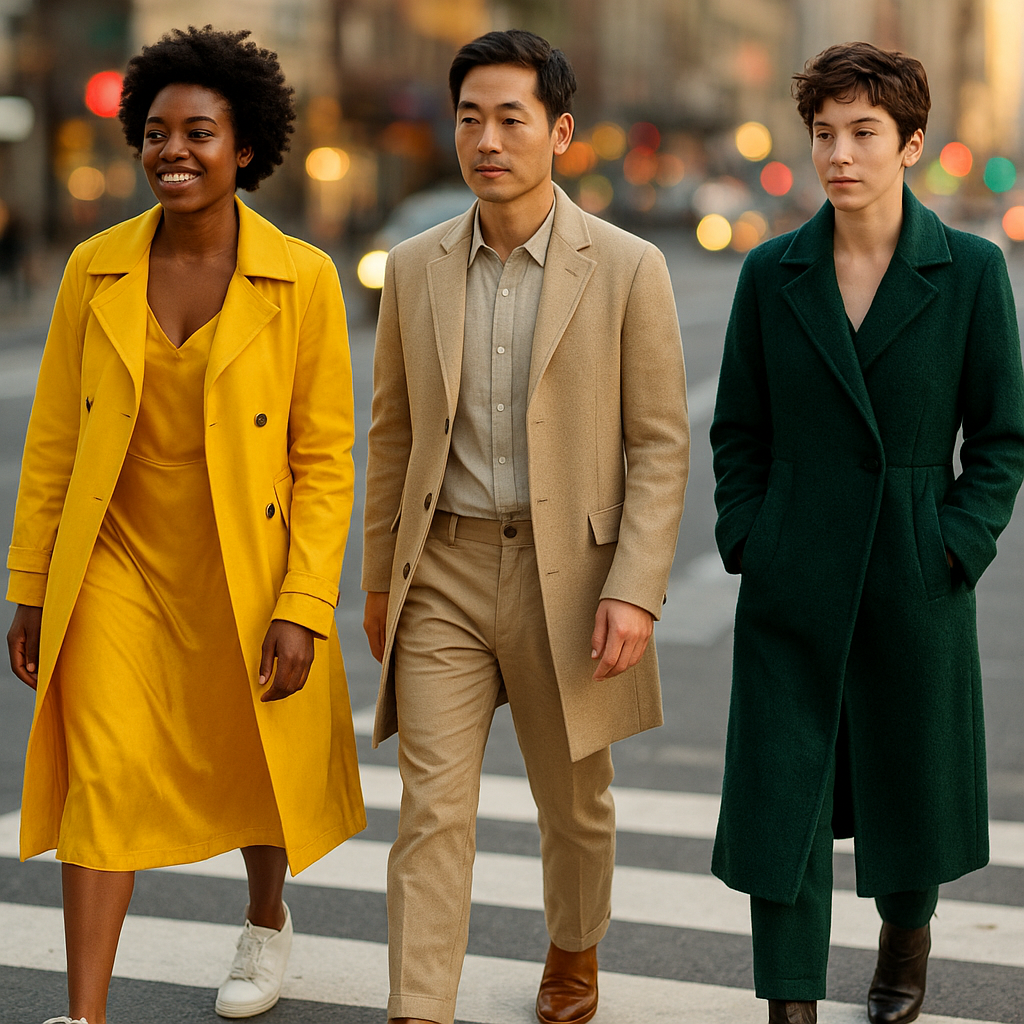
The three-colour rule suggests limiting any outfit to a maximum of three colours to maintain visual cohesion. The logic is psychological as much as aesthetic — too many colours create visual chaos that can make you appear scattered or uncertain.
A typical application might be: navy suit (colour one), white shirt (colour two), burgundy tie and pocket square (colour three). This creates enough variety to be interesting without overwhelming the eye.
The rule works because it leverages the brain’s preference for pattern recognition and order. When your outfit follows a clear colour structure, it signals intentionality and attention to detail. However, it’s a guideline rather than a law — some people carry off bold, multicoloured looks with confidence that makes the rule irrelevant.
Building a Psychologically Supportive Wardrobe
Rather than overhauling your entire wardrobe, start by observing how different colours make you feel over the course of a day. Keep notes on your phone or in a journal. You might discover that certain shades genuinely do affect your energy levels, mood, or confidence in measurable ways.
Consider creating intentional colour associations. If you’ve got a red blazer that makes you feel powerful, reserve it for days when you need that psychological boost. If soft blue calms your anxiety, make sure you’ve got options in that shade for stressful situations.
Pay attention to how colours interact. The combination of colours you wear can create different effects than individual colours alone. Navy and grey together signal serious professionalism, whilst navy and coral feel more approachable and creative.
Don’t ignore your gut response to colour. Psychology provides general frameworks, but individual associations matter enormously. If you had a wonderful experience whilst wearing green, that colour will carry positive associations for you specifically, regardless of what colour psychology research says.
The Cultural Context of Colour in Clothing
Colour meanings aren’t universal — they’re deeply influenced by cultural context. Red symbolises luck and prosperity in Chinese culture, making it traditional for weddings and celebrations. In India, yellow is associated with knowledge and learning. In South Africa, red is a colour of mourning.
These cultural variations matter increasingly in our globalised world. What’s appropriate for a business meeting in London might send entirely different signals in Tokyo or São Paulo. When travelling or working across cultures, research local colour associations to avoid unintended messages.
Even within cultures, colour meanings shift across generations and subcultures. Black, once exclusively associated with mourning in Western fashion, became a symbol of artistic rebellion, then high fashion, and now serves multiple contradictory meanings depending on context.
Conclusion: Colour as a Daily Psychological Tool
The colours we choose to wear each morning are far more than aesthetic decisions — they’re psychological interventions that affect our mood, performance, and how others respond to us. From red’s confidence-boosting intensity to blue’s calming trustworthiness, each colour offers distinct psychological benefits that we can harness intentionally.
Understanding colour psychology doesn’t mean overthinking every outfit choice. Instead, it offers a framework for making more conscious decisions about how you present yourself to the world and how you want to feel throughout your day. Whether you’re drawn to dopamine dressing with vibrant hues or prefer the quiet authority of darker tones, awareness of colour’s psychological impact gives you another tool for navigating daily life.
The most powerful approach combines general psychological principles with your personal associations and responses. Pay attention to how different colours genuinely make you feel, experiment with shades outside your usual palette, and don’t be afraid to use colour strategically for important occasions. Your wardrobe is already influencing your psychology — the only question is whether you’re doing it intentionally.